Search Results
Search this site
3414 results found with an empty search
- Stolen
Films/Videos Stolen 2023 Stolen (2023) is a documentary directed by Margo Harkin. It tells the story of how over 80,000 unmarried mothers came to be incarcerated in mother & baby homes in Ireland between 1922 and 1998. The homes were run by nuns. Many of the women were subsequently separated from their babies. Babies were adopted in Ireland as well as abroad. Some became foster children and worked as farm labourers from the age of 6. As many as 9,000 of the babies died. External Website
- The History of Tom Jones, a Foundling
Television Shows The History of Tom Jones, a Foundling 1997 A dramatisation of the 1749 novel by Henry Fielding, The History of Tom Jones, a Foundling (1997) recounts the adventures of foundling, Tom Jones, as he is taken in by the kind Squire Allworthy and then banished from the Allworthy estate and has a number of adventures, eventually ending up in London. External Website
- Lilo & Stitch
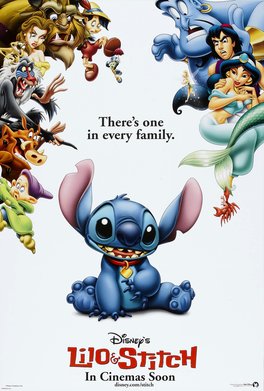
Films/Videos Lilo & Stitch 2021 Lilo & Stitch is a 2002 animated science fiction comedy-drama film produced by Walt Disney Feature Animation and released by Walt Disney Pictures. The film's story revolves around two eccentric and mischievous individuals: a six-year-old Hawaiian girl named Lilo Pelekai, who is raised by her older, young adult-aged sister Nani after their parents died in a car accident, and a blue extraterrestrial animal-like creature called Experiment 626, who is adopted by Lilo as her "dog" and renamed "Stitch". Stitch, who is genetically engineered by his mad scientist creator to cause chaos and destruction, initially uses Lilo to avoid being captured by an intergalactic federation, but the two individuals develop a close bond through the Hawaiian concept of ʻohana, or extended family. This bond causes Stitch to reconsider and later defy his intended destructive purpose in order to keep his family together. External Website
- Charles Dickens - Great Expectations
Radio & Podcast Charles Dickens - Great Expectations History Extra 2025 In this History Extra podcast, Charles Dickens’ scholar, Peter Oxford, talks about the famous writer. The focus for the conversation are the things about Dickens that might not be well known. For example, the shame that Dickens experienced because of being taken out of school to work in a blacking factory as a young boy. There’s also a conversation about Dickens’ marriage to Catherine Hogarth and the breaking up some years later. Dickens begins to write about what a bad mother Catherine was, how the two of them never got along. According to Peter Oxford, this wasn’t true. But the 2 grow apart. Charles meets the Ternan family, and the relationship with Ellen develops. Even though Dickens was trying to protect his ‘brand’ by badmouthing Catherine, says Oxford, that’s the bit we now have trouble with. External Website
- The Mysterious Benedict Society
Television Shows The Mysterious Benedict Society 2021 The Mysterious Benedict Society (2021-2023) is an American tv series based on the children’s books Trenton Lee Stewart. Tony Hale plays Nicholas Benedict and his long-lost twin broth, LD Curtain/Nathaniel Benedict. “A Bunch of Smart Orphans” is the title of the 1st episode. The 4 children protagonists are introduced and “The Emergency” discussed. The Emergency requires the children to infiltrate the Institute run by Curtain who is brainwashing people. External Website
- The Wide, Wide World
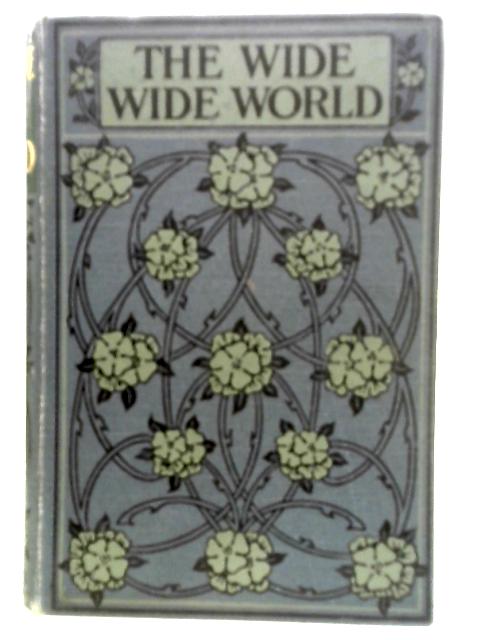
Fiction featuring Care Experience The Wide, Wide World Susan Warner 1850 Often thought of as America's first bestselling book, The Wide, Wide World (1850) by Susan Warner features a child in kinship care. Ellen Montgomery is taken to Europe to live with an aunt because her mother is ill. The aunt, Fortune Emerson, is unkind. After a time Ellen is invited to stay with relatives in Scotland where she is treated more benevolently, but the relatives become possessive, wanting Ellen to renounce her American heritage and her religion. Ellen returns to American after she marries John Humphreys, the brother of a friend she met when living with Fortune Emerson. External Website
- Rico Hinson-King
Writers Rico Hinson-King Rico Hinson-King originally wrote his story "Strong and Tough" during homework club at Manchester City FC in 2020 based on his own experience of being fostered and then adopted. He went on to win the Premier League Young Writer of the Year competiton. He plays for the U13s at Manchester City football club. His second book Football is for Everyone: A heart-warming story about bravery and inclusivity was published in 2024 and is illustrated by Nick Sharrat. External Website
- An Angel for May
Films/Videos An Angel for May 2002 Young Tom, who is unhappy at home because of his parents' separation, travels fifty years to the past after discovering a time machine. He meets May, a little orphan who has been traumatised. Now that he knows his friends' fate and his own, he will try to reorder the events and change their history. External Website
- Long Bright River
Television Shows Long Bright River 2025 Long Bright River (2025) is a police procedural based on the eponymous novel by Liz Moore. Mickey (Amanda Seyfried) is a Philadelphia police patrol officer working in a high-crime area. When 3 women are found dead, and her ‘superiors’ decide these are suicides rather than homicides, Mickey begins to investigate the deaths. We find out during the series that Mickey and her younger sister Kacey (Ashleigh Cummings) were raised in the kinship care of their grandfather (John Doman). We also find out **spoiler alert** late in the series that Kacey’s now 8-year-old son was removed from her by the state when he was a baby. Mickey has been raising Thomas (Callum Vinson) as if he is her own child. External Website
- Gary Coleman
Actors Gary Coleman Gary Coleman (1968-2010), child star of Diff’rent Strokes (1978-1985), was adopted as a baby. Gary Wayne Coleman was born in Zion, Illinois and adopted as a baby by Edmonia Coleman, a nurse, and W.G. Coleman, a salesman for a pharmaceutical company. Coleman was diagnosed at birth with several conditions including nephritis, a kidney disorder. His adult height was impacted by the treatment for nephritis – he was only 1.4 metres (4’ 8”) tall. Coleman 1st appeared in a tv commercial for a Chicago bank. As a result of that commercial, he was cast in the sitcom Diff’rent Strokes as 1 of 2 African American brothers adopted by a rich white man after their mother dies. After Diff’rent Strokes was cancelled, Coleman appeared occasionally in television series or in movies, often as a minor character, sometimes as himself. Gary Coleman died from a head injury in 2010 at the age of 42. Gary Coleman at E3, 2005. Photograph by Daniel McConnell. CC BY-SA 2.0 via Wikimedia Commons External Website
- Foreign Correspondent: Saving the Children
Films/Videos Foreign Correspondent: Saving the Children 2024 In this Foreign Correspondent program, senior reporter with the Australian Broadcasting Commission, Mazoe Ford, investigates the adoption of children from South Korea since the end of the Korean war in 1953. Something like 200,000 children were adopted internationally. Now adults, the adoptees are returning to South Korea for information about their birth parents and how they came to be adopted. There are concerns amongst the adoptees about corruption, malpractice & human rights violations. These concerns have resulted in an official investigation into Korea’s international adoption scandal. External Website
- Peregrina Sails
Activists Peregrina Sails Elana Connor 2017 Elana Connor has been solo sailing since 2017 to increase global awareness of foster care. Her goal is to remind the world that children & young people in foster & other forms of state care are “capable of unlimited achievements”. You can read more about Elana’s intentions & adventures here on her website. She even has a recipe for making a potato salad while at sea! And what to do when there’s a pandemic and borders close! External Website
- The Gathering
Television Shows The Gathering 2024 The Gathering is a Merseyside-set drama about a teenage girl violently attacked at a rave on a tidal islet. The story follows a diverse group of teens and their parents, each with possible motives, while weaving in the worlds of competitive gymnastics and urban parkour to paint a vivid picture of a fractured community. In Episode 3, Adam (played by Sonny Walker) it transpires that Adam has spent time in care, likely due to the instability of his mother Nina's situation and mental health struggles, which makes him protective of his younger half-brother Kyran. Adam navigates two very different worlds—his working-class past and his current middle-class stepfamily environment. External Website
- James and the Giant Peach
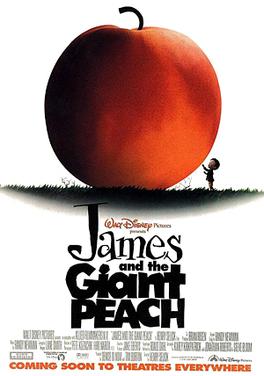
Films/Videos James and the Giant Peach 1996 James and the Giant Peach is a movie starring Paul Terry, Joanna Lumley, and Pete Postlethwaite. An orphan who lives with his two cruel aunts befriends anthropomorphic bugs who live inside a giant peach, and they embark on a journey... External Website
- Jack Maggs
Plays & Musicals featuring Care Exp Jack Maggs Peter Carey 2024 Jack Maggs (1997) is a novel by Australia writer Peter Carey. Set in 19th century London, Jack Maggs is a retelling of Great Expectations (1861) by Charles Dickens with Jack Maggs as a central character (instead of Abel Magwitch). Jack Maggs was a foundling who was given in to foster care and trained to be a thief. After being betrayed, he is transported to the penal colony of New South Wales, where he does well and provides for his son in London, Henry Phipps (instead of Pip). Jack Maggs has been adapted for the stage by South Australian born playwright Samuel Adamson and the play has been put on by the State Theatre Company of South Australia in Adelaide during November 2024. Mark Saturno plays Jack Maggs and the story is told by another character who has a minor role in Great Expectations, Mercy Larkin (Ahunim Abebe), a housemaid. External Website
- The Umbrella Academy
Films/Videos The Umbrella Academy 2019 On one day in 1989, 43 infants are inexplicably born to random, unconnected women who showed no signs of pregnancy the day before. Seven are adopted by billionaire industrialist Sir Reginald Hargreeves, who creates the Umbrella Academy and prepares his "children" to save the world. In their teenage years, though, the family fractures and the team disbands. Fast forward to the present time, when the six surviving members of the clan reunite upon the news of Hargreeves' passing. They work together to solve a mystery surrounding their father's death, but divergent personalities and abilities again pull the estranged family apart, and a global apocalypse is another imminent threat. The series is based on a collection of comics and graphic novels created and written by My Chemical Romance lead singer Gerard Way. External Website
- Coco Chanel
Radio & Podcast Coco Chanel The Scandal Mongers Podcast 2024 French fashion designer Gabrielle (Coco) Chanel (1883-1971) was in an orphanage as a child. In this video, English biographer and social historian, Anne De Coucy speaks about Coco Chanel and her astonishing rise from orphanage kid to one of the best known women in France. Anne De Coucy also scotches long standing views of Chanel as pro-Nazi. External Website
- My Place
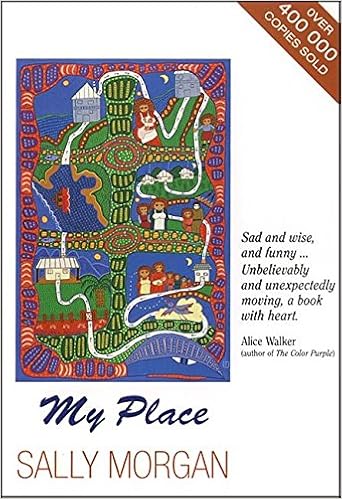
Autobiography/Memoir My Place Sally Morgan 2010 Looking at the views and experiences of three generations of indigenous Australians, this autobiography unearths political and societal issues contained within Australia's indigenous culture. Sally Morgan traveled to her grandmother’s birthplace, starting a search for information about her family. She uncovers that she is not white but Aboriginal—information that was kept a secret because of the stigma of society. This is a classic of Australian literature that finally frees the tongues of the author’s mother and grandmother, allowing them to tell their own stories of being taken from their parents. External Website
- Rudyard Kipling
Writers Rudyard Kipling 1865-1936 Joseph Rudyard Kipling ( RUD-yərd; 30 December 1865 – 18 January 1936) was an English journalist, short-story writer, poet, and novelist. He was born in India; when he was six, Rudyard was taken to England by his parents and left in a foster home for almost six years and then went to boarding school from 1878. Kipling's works of fiction include The Jungle Book (1894), Kim (1901), and many short stories, including "The Man Who Would Be King" (1888). His poems include "Mandalay" (1890), "Gunga Din" (1890), "The Gods of the Copybook Headings" (1919), "The White Man's Burden" (1899), and "If—" (1910). He is seen as an innovator in the art of the short story. Following his death in 1936, his ashes were interred at Poets' Corner, part of the South Transept of Westminster Abbey. Kipling's subsequent reputation has changed with the political and social climate of the age. The contrasting views of him continued for much of the 20th century. Literary critic Douglas Kerr wrote: "[Kipling] is still an author who can inspire passionate disagreement and his place in literary and cultural history is far from settled. But as the age of the European empires recedes, he is recognised as an incomparable, if controversial, interpreter of how empire was experienced. That, and an increasing recognition of his extraordinary narrative gifts, make him a force to be reckoned with." External Website
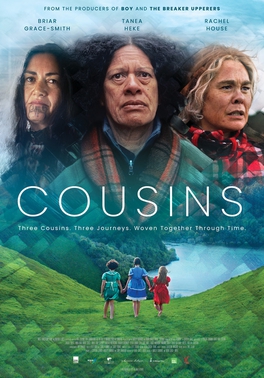
- Cousins
Films/Videos Cousins 2021 The story of Aboriginal Australian children stolen from their parents - the Stolen Generation(s) - is well known. Less well known (outside of New Zealand) is that Maori children were stolen from their families too - the theme of this 2021 film, Cousins. The film is an adaptation from the 1992 novel of the same name by Patricia Grace, a foremost NZ literary figure. It tells the story of 3 cousins - 1 of whom was taken and raised in an orphanage and in foster care - who travel different paths as adults. Cousins was produced by an all female Maori team and features 9 Maori female actors playing the 3 cousins across 3 stages of their lives. External Website