Search Results
Search this site
3414 results found with an empty search
- Kathy Burke
Actors Kathy Burke Katherine Lucy Bridget Burke (born 13 June 1964) is an English actress, comedian, writer, producer, and director. She was born in London; her mother died of cancer when she was just two and Kathy was fostered for four years by neighbours. At the age of six, Kathy returned to live with her father and 2 brothers. Kathy Burke achieved fame with her appearances on sketch shows such as French and Saunders (1988–1999) and her recurring role as Magda on the BBC sitcom Absolutely Fabulous (1992–1996), as well as her frequent collaborations with fellow comedian Harry Enfield. For her portrayal of Valerie in the 1997 film Nil by Mouth, she won Best Actress at the Cannes Film Festival and was nominated for a BAFTA for Best Actress in a Leading Role. Burke made her film debut in the 1982 drama Scrubbers, and played Queen Mary I in the award-winning biographical film Elizabeth (1998). Her other film appearances include Sid and Nancy (1986), Dancing at Lughnasa (1998), This Year's Love (1999), Kevin & Perry Go Large (2000), The Martins (2001), Anita and Me (2002), and Once Upon a Time in the Midlands (2002). From 1999 to 2001, she starred as Linda La Hughes on the BBC sitcom Gimme Gimme Gimme, for which she received a British Comedy Award and two BAFTA nominations. Having spent most of the 2000s concentrating on her work as a theatre director, she returned to film roles in the 2010s with Tinker Tailor Soldier Spy (2011), Pan (2015), and Absolutely Fabulous: The Movie (2016). External Website
- Virgin River
Television Shows Virgin River 2021 Virgin River is an American romantic drama streaming television series, based on the Virgin River novels by Robyn Carr. In the first season there is a story of a baby found on the doorstep of the town doctor. The child's mother is found suffering from post-partum depression and elects to put her daughter into kinship care. External Website
- Stolen Generations Testimonies
Blogs/Web Pages/Articles Stolen Generations Testimonies Stolen Generations' Testimonies 2003 The ‘Stolen Generations’ Testimonies’ project is an initiative to record on film the personal testimonies of Australia’s Stolen Generations Survivors and share them online. The Stolen Generations Testimonies Project was initiated by filmmaker Melanie Hogan (www.melaniehogan.com ) soon after the release of her acclaimed documentary film Kanyini (www.kanyini.com ), featuring Stolen Generation Survivor Uncle Bob Randall. In 2009 more than thirty Stolen Generations’ Survivors shared their stories, their memories and themselves in the first round of interviews for the ‘Stolen Generations’ Testimonies Foundation’. External Website
- The Boxcar Children (film)
Films/Videos The Boxcar Children (film) 2014 The Boxcar Children (1924) is a children’s book series written by American teacher Gertrude Chandler Warner In 2014 the film, The Boxcar Children, was released and won Best Animated Feature Film at the 2015 St Tropez International Film Festival. The Boxcar Children tells the story of four orphaned children: Henry, Jessie (or Jess), Violet, and Benny who make a home for themselves in an abandoned box car or railway wagon. After they meet and move in with their grandfather, the grandfather transfers the boxcar to his backyard so the children can play in it. In 2018, the sequel film, The Boxcar Children: Surprise Island, was released. External Website
- Home at Last
Films/Videos Home at Last 1988 Home at Last (1988) is a story about an orphaned 13-year-old boy who is sent via the Orphan Tree to Nebraska. In Nebraska, Billy (Adrien Brody in his 1st movie) is adopted by a family which has recently migrated from Sweden to the USA and lost their older son. There are some adjustments to be made of course, for both Billy and his new family. But eventually Billy feels Home At Last. External Website
- Reconsidering the care-crime connection in a climate of crisis
Academic Articles Reconsidering the care-crime connection in a climate of crisis Claire Fitzpatrick 2020 This article charts new ground by exploring the important increase in awareness surrounding the care–crime connection in recent years. The over-representation of care experienced individuals in criminal justice settings has long been taken for granted. However, there has been a recent surge of interest in England and Wales in the need to avoid unnecessarily criminalising looked after children, and to support those with care experience in prison. Paradoxically, this increased awareness has occurred at the same time as a climate of crisis has threatened both the care system’s and the prison system’s capacity to function effectively. Despite the current climate, this article argues that things can be done to challenge the care–crime connection. Such strategies include: changing our language, connecting distinct policy priorities and moving beyond the limits of the law. Furthermore, the development of a life-course perspective could significantly improve understanding of the impact of care experience over time. This article concludes by arguing that in the current climate, continued diversionary push-back from the youth justice system is vital. Crucially, this could help further reduce the number of first time entrants in the justice system, and ultimately offer the best prospects for reducing the number of children who move between care and custody. External Website
- The Gap of Time by Jeanette Winterson review – an elegant retelling of Shakespeare
News - broadcast, print, internet, magazine articles The Gap of Time by Jeanette Winterson review – an elegant retelling of Shakespeare Sarah Crown 2015 This Winter’s Tale ‘cover version’, set in wealthy London and the deep south, kicks off a new series of Shakespeare for the 21st century. The Hogarth Shakespeare series launched in October 2015 with The Gap of Time – Jeanette Winterson’s reinvention of The Winter’s Tale. The story of a king whose jealousy results in the banishment of his baby daughter and the death of his beautiful wife. His daughter is found and brought up by a shepherd on the Bohemian coast. Winterson’s cover version opens in an American city called New Bohemia. Here we see recently bereaved Shep, find a baby in a BabyHatch and take her home. Baby hatches have been around since medieval times. A safe space usually outside homes for foundlings or orphanages, where new mothers could leave their unwanted baby rather than commit infanticide. Winterson, both abandoned and adopted, felt a particular resonance with this story. The narrative moves to London, a city reeling after the 2008 financial crisis where we find out how the abandoned baby ended up in a Baby Hatch. We meet The Winter’s Tale characters transformed. Leo (Leontes) is no longer King of Sicilia but an ex banker with a hedge fund, a helicopter, and a personality that verges on the sociopathic, while his wife MiMi (Hermione) is a famous French folk singer complete with wikipedia entry. As in the original, the dramatic events accelerate when Leo blows a gasket over unfounded suspicions that his wife has been sleeping with his best friend, Xen (Polixenes) who is a US-based writer of computer games. Whitbread Award-winner Jeanette Winterson said of The Winter’s Tale: 'All of us have talismanic texts that we have carried around and that carry us around. I have worked with The Winter’s Tale in many disguises for many years. This is a brilliant opportunity to work with it in its own right. And I love cover-versions.' External Website
- The Hurricane
Films/Videos The Hurricane 1999 African American professional boxer and activist, Rubin “Hurricane” Carter (1937-2014), was in a boys' home as a child. Rubin Carter was born in Clifton, New Jersey, 1 of 7 children. He was 11 when he stabbed a man and was sent to Jamesburg State Home for Boys. He escaped after 6 years and enlisted in the army, where he did well. Rubin Carter began his boxing career in 1961. He and another man were convicted of murder in 1967, but the convictions were formally dismissed in 1988. This story is told in The Hurricane (1999) and Rubin Cartin is played by Denzel Washington. The film also tells something of the story of Lesra Martin. Martin was born in 1963. Illiterate at the age of 15, he moved in with 3 Canadians, read the 16th Round by Rubin Carter, wrote to Carter in prison, and - along with his foster family - helped to find the evidence that eventually led to Carter's conviction being overturned. Lesra Martin went on to become a lawyer and motivational speaker. External Website
- Literary Hub
Blogs/Web Pages/Articles Literary Hub Liz Moore 2016 Liz Moore writes about her attraction to having orphan characters in her fiction. External Website
- Television Shows, R
Authors R Ratched ➝ Rocket's Island ➝ Ridley ➝ Revenge ➝ Reacher ➝ Return to Cranford ➝ Ripley (TV series) ➝ Run Away ➝ Revelation ➝ Ragnarok ➝ Back to Top
- Blogs/Web Pages/Articles, B
Authors B Orphans in fiction ➝ Orphans | film by Pakula [1987] ➝ Success Stories and Sad Statistics? ➝ Mary's story ➝ Trauma, Adverse Childhood Experiences, Determinism and Stigma... ➝ As Stolen Generations survivors ‘pass away at a rapid rate’, some still await official redress ➝ Lilian Bader: The First Black Woman to join the RAF ➝ Floella Benjamin (blog) ➝ “America’s Literary Giant.” On the Legacy of Edgar Allan Poe in Vietnam ➝ Eleanor and George’s story – love at the Foundling Hospital ➝ 7 Novels about Orphans ➝ Bridgeman Blog ➝ Care leavers deserve to be seen for their talents ➝ Culture misunderstood, families separated ➝ The Artist’s Book: Mothers’ Experiences of Adoption ➝ John’s story – one of the first foundlings ➝ 50+ Orphans in Literature ➝ Back to Top
- Tchin
Artists Tchin Tchin is a celebrated multi-disciplinary Indigenous artist of Narragansett and Blackfeet heritage. He grew up in foster care across Virginia and Rhode Island, where he often was one of the very few Indigenous individuals in his community. As a young teenager, the sense of being an outsider was profound. He was even stopped by police who told him, “you don't belong in this neighborhood.” Tchin’s early life in foster care was marked by alienation, discrimination, and tremendous hardship. Yet through resilience, self-education, and emotional support, he transformed these challenges into the fuel for his artistic path. His talents span jewelry making, storytelling, music, teaching, and writing. Educated at prestigious institutions, he’s also collaborated with fashion houses like Cartier and appeared in Vogue. External Website
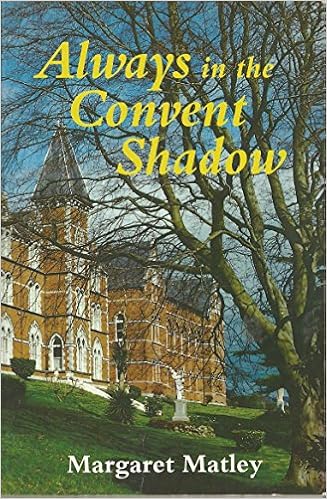
- Always in the convent shadow
Autobiography/Memoir Always in the convent shadow Margaret Matley 1991 The author recalls her childhood in a convent school, committed to the care of the Good Shepherd nuns after the death of her young mother. External Website
- Someone Else's Skin
Fiction featuring Care Experience Someone Else's Skin Sarah Hilary 2016 Introducing DI Marnie Rome, called to a women's refuge to take a routine witness statement, DI Marnie Rome instead walks in on an attempted murder. Trying to uncover the truth from layers of secrets, Marnie finds herself confronting her own demons. Because she, of all people, knows that it can be those closest to us we should fear the most..Five years ago, her family home was the scene of a shocking and bloody crime that left her parents dead and her foster brother in prison. Winner of the Theakston's 2015 Crime Novel of the Year, and a 2014 Richard and Judy Book Club pick. External Website
- ABC's Patricia Karvelas on her experience of Parliament's toxic 'sexist' culture and how a childhood tragedy shaped her.
News - broadcast, print, internet, magazine articles ABC's Patricia Karvelas on her experience of Parliament's toxic 'sexist' culture and how a childhood tragedy shaped her. Natasha Johnson 2021 ABC's Patricia Karvelas on her experience of Parliament's toxic 'sexist' culture and how a childhood tragedy shaped her. When Karvelas was eight years old, her parents died suddenly and she was raised variously by her maternal grandmother and two sisters, Sue and Voula, who are 11 and eight years older. External Website
- Behind the Scenes, D
Authors D Peter Llewelyn Davies ➝ Back to Top
- Sex in a Cold Climate
Films/Videos Sex in a Cold Climate 1998 Sex in a Cold Climate (1998) is an Irish documentary about the treatment of girls and women in the now infamous Magdalene Laundries. The documentary formed the basis of the 2002 film, The Magdalene Sisters, by Peter Mullen. Sex in a Cold Climates includes interviews with 4 women - one of whom was sent to a laundry from an orphanage at 15 because she was thought "too pretty". The women told of abuse by clergy and the grinding work routine. RTE, the state broadcaster in Ireland, refused to broadcast the document, so it was 1st shown on the UK's Channel 4. External Website
- Wicked
Fiction featuring Care Experience Wicked Jilly Cooper 2006 One of the main characters in Wicked is Paris Alvaston who is in care. Paris has spent 13 years in care, enduring frequent moves between foster placements and children’s homes. He suffers horrific abuse at the hands of male visitors in the children's home. Paris loves reading. Books become his escape from misery, offering solace, intellectual engagement, and hope. But he's also part of a feared pupil group, the “Wolf Pack,” At Bagley Hall, a chaotic yet elite school, headmaster Hengist Brett-Taylor schemes to merge with failing Larkminster Comprehensive. Financial motives clash with forbidden attraction, wary parents, rebellious staff, and students ready for mayhem. A new head believes in Paris' potential and nurtures his love for literature. External Website
- Borstal Boy
Autobiography/Memoir Borstal Boy Brendan Behan 1958 Borstal Boy (1958) is an autobiographical work by Irish writer Brendan Behan (b. Feb 9 1923-d. Mar 20 1964, Dublin). He was an Irish author noted for his earthy satire and powerful political commentary. The book recounts Behan’s youthful defiance, his commitment to the Irish Republican cause, and his subsequent imprisonment in an English Borstal (a reformatory) at the age of 16. Alongside accounts of harsh treatment, Behan vividly describes moments of camaraderie, dramatic and musical pursuits, as well as his engagement in gardening and handicrafts. Notable for its authentic dialogue, the book captures the raw and immediate exchanges between inmates. External Website
- Roy Dwight
Sport Roy Dwight Roy Dwight Former professional English footballer and cousin of English singer Elton John, Roy Dwight (1933-2002), was in kinship care as a child. Roy Dwight was about 8 years old when his mother died after the birth of her 3rd child and only daughter, Susan. Roy, his brother Dave and their father, Ted, moved in with Roy’s (and Elton John’s) grandparents, Edwin and Ellen Wright at 6 Stapley Road, Belvedere, Kent. Ted was sick at the time with tuberculosis. After Ted died, Roy and Dave continued living with their grandparents. Stanley Dwight, a trumpet player and Elton John’s father, was still living at home and was more like a brother than an uncle to the boys. Stanley and Edwin both encouraged Roy in his football and between 1954 and 1958, Roy played for Fulham, scoring 54 goals. He also played for the London XI team—created to play in the 1955 to 1958 Inter-Cities Fairs Cup—in 1957. In 1958, Roy Dwight began playing for Nottingham, scoring 26 goals in 41 games. He later played for Coventry City and Millwall. During the 1970s, Roy Dwight taught Physical Education at Forest Hill Boys Secondary School. External Website