Search Results
Search this site
3414 results found with an empty search
- Karen Menzies' hidden Aboriginal heritage
Radio & Podcast Karen Menzies' hidden Aboriginal heritage Karen Menzies 2016 The truth of Karen Menzies' Aboriginal heritage was a shock that took her more than a decade to fully comprehend. She was removed from her foster parents and spent her teenage years in instituions, later playing soccer for Australia. External Website
- Performing Arts, E
Authors E Australian singer ➝ Aboriginal Australian, Singer, songrwriter ➝ Back to Top
- Surviving the "House of a Hundred Windows": Irish Industrial Schools in Recent Fiction and Memoirs
Academic Articles Surviving the "House of a Hundred Windows": Irish Industrial Schools in Recent Fiction and Memoirs Michael Molino 2001 The story of industrial schools in Ireland is, then, a history of intersecting tendencies. On the one hand, initially well-intended educational and religious beliefs and practices gave way to a self-protecting system where abuse was tolerated and abusers protected. On the other hand, the stories of child abuse, often told by adults later in life, reflect a different trajectory—from a topic discussed, if at all, only in euphemistic and muted terms to an incendiary issue where guilt is often immediately assumed. This paradoxical history, with all its ambivalent attitudes, has been pointedly revealed in recent fiction and memoirs, where the stories of children sent to industrial schools are given voice and the horrors of institutional life exposed. External Website
- Jenni Fagan’s ‘visceral’ memoir of growing up in care wins Gordon Burn prize
News - broadcast, print, internet, magazine articles Jenni Fagan’s ‘visceral’ memoir of growing up in care wins Gordon Burn prize The Guardian 2025 Jenni Fagan’s memoir Ootlin, which recounts her experience growing up in care, has won the £10,000 Gordon Burn Prize. Announced at a ceremony in Newcastle, Fagan called the award a “huge honor” and hopes it will help the book reach a wider audience, influencing policymakers to better protect children in the care system. External Website
- James Dean
Actors James Dean James Byron Dean (February 8, 1931 – September 30, 1955) was an American actor. James' mother died when he was nine and his father sent him to live with relatives. James dropped out of university to pursue acting. In 1953 he performed the role of Cal Trask in East of Eden, for which he was posthumously nominated for Best Actor in the 1956 Academy Awards. He is remembered as a cultural icon of teenage disillusionment and social estrangement, as expressed in the title of his most celebrated film, Rebel Without a Cause (1955), in which he starred as troubled teenager Jim Stark. After his death in a car crash, Dean became the first actor to receive a posthumous Academy Award nomination for Best Actor, and remains the only actor to have had two posthumous acting nominations. In 1999, the American Film Institute ranked him the 18th best male movie star of Golden Age Hollywood in AFI's 100 Years...100 Stars list. External Website
- Fiction by Care Experienced authors, W
Authors W The Lost Orphan ➝ Kemosha of the Caribbean ➝ Cane Warriors ➝ The Runaway Orphans ➝ The Seven Sisters ➝ Oranges are not the only fruit ➝ Brenton Brown ➝ Brixton Rock ➝ Man Who Lived Underground ➝ Back to Top
- A Fortunate Life (Theatre adaptation)
Plays & Musicals featuring Care Exp A Fortunate Life (Theatre adaptation) A.B. Facey 2019 In 2020, a striking collaboration between artists of stage and screen honours the trials and triumphs of extraordinary everyman A.B Facey, whose award-winning Australian classic autobiography, A Fortunate Life, has been adapted for theatrical presentation. Albert Barnett Facey born in Maidstone, Victoria, Australia, in 1894, the youngest of seven children. His father died when he was two of typhoid fever. When Bert was four, his Grandpa died. Bert's mother then left the rest of her children to be looked after by their grandmother to go to the Goldfields, but met and married another man and had nothing further to do with Bert's upbringing. Facey had been making notes on his life since an early age, at the urging of his wife, he eventually wrote them up into a full manuscript, by hand, in a series of exercise books, working at the kitchen table. He then had the manuscript typed up and sent it to Fremantle Arts Centre Press, requesting that twenty copies be printed and bound for family members and friends. Facey's story was so remarkable, however, that it was immediately accepted for commercial publication. It appeared just nine months before his death on 11 February 1982, in his 88th year. External Website
- Ten Doors Down: The story of an extraordinary adoption reunion
Autobiography/Memoir Ten Doors Down: The story of an extraordinary adoption reunion Robert Tickner 2020 Robert Tickner had always known he was adopted, but had rarely felt much curiosity about his origins. Born in 1951, he had a happy childhood - raised by his loving adoptive parents, Bert and Gwen Tickner, in the small seaside town of Forster, New South Wales. He grew up to be a cheerful and confident young man with a fierce sense of social justice, and the desire and stamina to make political change. Serving in the Hawke and Keating governments, he held the portfolio of minister for Aboriginal and Torres Strait Islander affairs. During his time on the front bench, Robert's son was born, and it was his deep sense of connection to this child that moved him at last to turn his attention to the question of his own birth. Although he had some sense of the potentially life-changing course that lay ahead of him, he could not have anticipated learning of the exceptional nature of the woman who had brought him into the world, the deep scars that his forced adoption had left on her, and the astonishing series of coincidences that had already linked their lives. And this was only the first half of a story. External Website
- The Man Who Mistook His Wife for A Hat
Biography of Care Experienced People The Man Who Mistook His Wife for A Hat Oliver Sacks 1985 Oliver Sacks' well known book, The Man Who Mistook His Wife for a Hat (1985), contains 3 case histories of Care Experienced People. 2. Rebecca was raised by her grandmother and although many see her as deficient, theatre offers an important way for Rebecca to understand and express herself. When she's performing on stage, no one sees Rebecca as lacking. 2. Rebecca was raised by her grandmother and although many see her as deficient, theatre offers an important way for Rebecca to understand and express herself. When she's performing on stage, noone sees Rebecca as lacking. 3. Twins John and Michael have been in institutions since age 7. By the time they're 26 they're already famous because of their numerical prowess. However, when they're separated and living a semi-'normal' life, they lose their gift. External Website
- The BFG (film)
Films/Videos The BFG (film) 2016 The BFG is a movie starring Mark Rylance, Ruby Barnhill, and Penelope Wilton. An orphan little girl befriends a benevolent giant who takes her to Giant Country, where they attempt to stop the man-eating giants that are invading the... External Website
- Noel Tovey
Actors Noel Tovey Aboriginal Australian actor, dancer, singer, director, choreographer and writer, Noel Tovey (b. 1934), was in a children’s home and foster care as a child. Noel was the 3rd of 5 children born into an impoverished family living in the inner-city suburb of Carlton, Melbourne. His mother, Winifred Ann Tovey, was Aboriginal and his father, Frederick Morton, was of African-Canadian-French-Creole heritage. When Noel was 6, their parents abandoned their children and the Welfare Authorities put them into the Royal Park Depot, and from there Noel was taken in by Arthur Challenger and his mother, who lived in Burren Junction, more than 600km north-west of Sydney. n 1954 Noel danced in Paint Your Wagon, which toured in Adelaide and Sydney. Later, Noel Tovey trained at the national Theatre Ballet School. Then in 1961, he was in London working as the principal dancer for the Sadler’s Wells Company. He also made his debut as a singer and choreographer in London, directing and choreographing numerous productions across Europe. While in London, Noel and his partner set up what became one of the top galleries in London, L’Odeon. Noel didn’t return to Australian until 1990. He set up a performing arts course and continued his work as a director. Little Black Bastard, Noel Tovel’s autobiography, was published in 2004 to critical acclaim. The one man play based on the book was also well received in Australia, at the Edinburgh Festival in 2010 and the London Origins Festival in 2011. Noel Tovey has served on the NSW Arts Council, the 2000 Olympic Arts Festival and the AIDS Trust of Australia, amongst others. He set up the Novel Tovey Scholarship Fund to assist those from disadvantaged backgrounds to attend the Flying Fruit Fly Circus, a leading youth arts company. External Website
- A Chance in the World: An Orphan Boy, A Mysterious Past, and How He Found a Place Called Home
Autobiography/Memoir A Chance in the World: An Orphan Boy, A Mysterious Past, and How He Found a Place Called Home Steve Pemberton 2012 Taken from his mother at age three, Steve Klakowicz lives a terrifying existence. Caught in the clutches of a cruel foster family and subjected to constant abuse, Steve finds his only refuge in a box of books given to him by a kind stranger. In these books, he discovers new worlds he can only imagine and begins to hope that one day he might have a different life. Armed with just a single clue, Steve embarks on an extraordinary quest for his identity, only to find that nothing is as it appears. External Website
- Lying Beside You
Fiction featuring Care Experience Lying Beside You Michael Robotham (2022) 2022 Michael Robotham 4 Lying Beside You (2022) is the 3rd in the Michael Robotham Cyrus Haven series. Cyrus Haven is a forensic psychologist who was in kinship care with his grandparents after his older brother murdered his parents and twin sisters. In Good Girl, Bad Girl (2019) he is introduced to Evie Cormac who has been in foster care and is now living in a youth detention centre. The sequel, When She Was Good (2020), included a Care Experienced characters who runs a paedophile ring and another is an enabler who transports children from paedophile to paedophile. With Lying Beside You there are a range of dodgy characters (including a cop and a forensic scientist) in addition to a vengeful serial kidnapper, none of whom have been in informal care or the formal care system. Evie, now living in Cyrus' home, helps to solve the crime. External Website
- Episode 5. Person With Care Experience - BBC Sounds
Radio & Podcast Episode 5. Person With Care Experience - BBC Sounds Small Axe Ashley John-Baptiste and Dr Sylvan Baker discuss the experiences of Black children in care in the UK. External Website
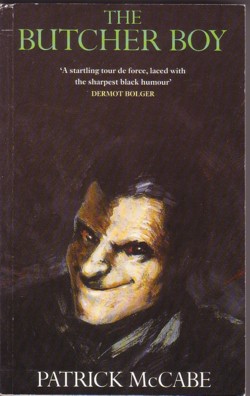
- The Butcher Boy
Fiction featuring Care Experience The Butcher Boy Patrick McCabe 1992 The Butcher Boy is a 1992 novel by Irish writer, Patrick McCabe. It tells the story of Francis "Francie" Brady who ends up in an 'industrial school' where he is sexually abused by one of the priests. He is also befriended by a gardener. The title comes from Francie's work as a butcher and his dismembering of the body of a woman he murders. The Butcher Boy was adapted into an award winning film in 2007. External Website
- Karobran: the story of an Aboriginal girl
Fiction by Care Experienced authors Karobran: the story of an Aboriginal girl Monica Clare 1978 Novel based on the authors experiences growing up as an Aboriginal in the NSW white community External Website
- Langston Hughes (poet)
Poets Langston Hughes (poet) Langston Hughes James Mercer Langston Hughes (1901 – 1967) was an American poet, social activist, novelist, playwright, and columnist from Joplin, Missouri. Hughes was born in Missouri. His father abandoned the family soon after the birth. After his parents divorced, he was raised by his maternal grandmother in Kansas as his mother needed to travel for work. When his grandmother died, Hughes lived with family friends for 2 years. Eventually Hughes lived again with his mother after she remarried and settled in Cleveland. There he wrote for his high school newspaper and published his first poetry. One of the earliest innovators of the then-new literary art form called jazz poetry, Hughes is best known as a leader of the Harlem Renaissance. He famously wrote about the period that "the Negro was in vogue", which was later paraphrased as "when Harlem was in vogue." In addition to poetry, Hughes wrote plays, and short stories. He also published several non-fiction works. From 1942 to 1962, as the civil rights movement was gaining traction, he wrote an in-depth weekly column in a leading black newspaper, The Chicago Defender. External Website
- Academic Books & Book Chapters, F
Authors F Representing Aboriginal Childhood The Politics of Memory and Forgetting in Australia ➝ Street urchins, sociopaths and degenerates: orphans of late-Victorian and Edwardian fiction ➝ Convict Orphans ➝ Back to Top
- Despicable Me
Films/Videos Despicable Me 2010 Despicable Me - Felonious Gru, a super-villain who adopts three girls, Margo, Edith, and Agnes, from an orphanage to try and steal a shrink ray from his rival Vector (otherwise known as Victor), to shrink and steal the moon. External Website
- The Boy Who Loved Books: A Memoir
Autobiography/Memoir The Boy Who Loved Books: A Memoir John Sutherland 2007 Memoir of British academic and literary critic, John Sutherland, who was in kinship care as a child. External Website