Search Results
Search this site
3414 results found with an empty search
- Jamie Foxx
Actors Jamie Foxx Eric Marlon Bishop (born December 13, 1967), known professionally as Jamie Foxx, is an American actor, singer-songwriter, comedian, television presenter, and record producer. And adoptee, Foxx became widely known for his portrayal of Ray Charles in the 2004 biographical film Ray, for which he won the Academy Award, BAFTA, Screen Actors Guild Award, Critics' Choice Movie Award and Golden Globe Award for Best Actor. That same year, he was nominated for the Academy Award for Best Supporting Actor for his role in the crime film Collateral. Since spring 2017, Foxx has served as the host and executive producer of the Fox game show Beat Shazam. Foxx was given his own television sitcom The Jamie Foxx Show, in which he starred, co-created and produced, airing for five highly rated seasons from 1996 to 2001 on The WB Television Network. Foxx is also a Grammy Award-winning musician. External Website
- Wash My Soul in the River's Flow
Films/Videos Wash My Soul in the River's Flow 2021 Wash My Soul in the River's Flow (2021) is a moving, inspiring and important documentary about the legendary Aboriginal Australian singer-songwriters Ruby Hunter and Archie Roach. Both Hunter and Roach are members of the Stolen Generation. They met as young homeless people and Ruby encouraged Archie in his singing and songwriting, later joining him on stage and becoming the first Aboriginal Australian woman to record with a major label. Wash My Soul in the River's Flow tell the story of Ruby and Archie via their songs and conversations for their 2004 Kura Tungar concert with the Australian Art Orchestra. External Website
- Children's Fiction
Children's Fiction The Snow Queen Hans Christian Anderson ➝ Cinderella Giambattista Basile ➝ The Finding Nina ➝ The Ghosts and Jamal Bridget Blankley ➝ An Angel for May Melvin Burgess ➝ Tarzan of the Apes Edgar Rice Burroughs ➝ The Wanderer Sharon Diaz Creech et al. ➝ James and the Giant Peach Roald Dahl ➝ Being Billy Phil ➝ Anna Casey's Place in the World Adrian Fogelin ➝ Coram Boy Jamila Gavin ➝ Who Am I? The Diary of Mary Talence, Sydney 1937 Anita Heiss ➝ Home For a While (4-8 years) Lauren Kerstein ➝ The Jungle Book Rudyard Kipling ➝ The Willoughbys Lois Lowry ➝ Delly Duck (4-8 years) Holly Marlow ➝ Saffy's Angel Hilary McKay ➝ Lucky Button Michael Morpurgo ➝ The Cherub Series Robert Muchamore ➝ The Cat Who Saved Books Sosuke Natsukawa (Author), Louise Heal Kawai (Translator) ➝ Fablehouse E.L. Norry ➝ Escape from Cockatoo Island Yvette Poshoglian ➝ Mostly Mary Gwynedd Vulliamy Rae et al. ➝ When Marnie was There Joan G Robinson ➝ Don't Ask The Dragon Lemn Sissay (Author) Greg Stobbs (Illustrator) ➝ The Leftovers Eleanor Spence ➝ The Extraordinary Education of Nicholas Benedict Trenton Lee Stewart ➝ The Circus is Coming Noel Streatfeild ➝ The Adventures of Huckleberry Finn Mark Twain ➝ Uprising Alex Wheatle ➝ Tales of the Weird, the Wild and the Wonderful Sophie Willan ➝ Hetty Feather (novel) Jacqueline Wilson ➝ Midnight Jacqueline Sharratt Wilson et al. ➝ Refugee Boy Benjamin Zephaniah ➝ The Coral Island RM Ballantyne ➝ The Wonderful Wizard of Oz L Frank Baum ➝ Madeline Ludwig Bemelmans ➝ Paddington Michael. Bond ➝ The Secret Garden Frances Hodgson Burnett ➝ The Boxcar Children Mysteries Gertrude Chandler Warner ➝ Tell me again about the night i was born Jamie Lee Curtis ➝ Great Expectations (adapted) Charles Dickens ➝ Moonfleet J. Meade Falkner ➝ The Graveyard Book Neil Gaiman ➝ Pictures of Hollis Wood Patricia Reilly ➝ Strong and Tough Rico Hinson-King and Nick Sharratt ➝ What Mummies Are Made Of by Stephanie Hutton Storgy Kids ➝ Watch over me Nina LaCour ➝ Goodnight Mister Tom Michelle Magorian ➝ The Children of the New Forest Frederick Marryat. ➝ Flying High: The Story of Gymnastics Champion Simone Biles (4-8 years) Michelle Meadows ➝ A Long Way Home Michael Morpurgo ➝ Henderson's Boys Robert Muchamore ➝ Close Your Pretty Eyes (11-13 years) Sally Nicholls ➝ Runaways E.L. Norry ➝ I was a Rat! Or, The Scarlet Slippers Philip Pullman ➝ The Star Outside My Window (8-11 years) Onjali Q. Rauf ➝ Harry Potter and the philosopher's stone J K Rowling ➝ The Bad Beginning (A Series of Unfortunate Events) Lemony Snicket ➝ Heidi Johanna Spyri ➝ The Mysterious Benedict Society Trenton Lee Stewart ➝ Fosterboy Rhian Taylor ➝ The Adventures of Tom Sawyer Mark Twain ➝ Home Girl Alex Wheatle ➝ The Lizzie and Belle Mysteries J.T. Williams ➝ My Mum Tracy Beaker Jacqueline Sharratt Wilson et al. ➝ Dustbin Baby Jacqueline Sharratt Wilson et al. ➝ Peter Pan in Kensington Garden J M Barrie ➝ The Outside Child Nina Bawden ➝ Peter and Lotta's Christmas Elsa Beskow ➝ My Forever Family: from fostering to adoption Nicky Brookes ➝ A Little Princess Frances Hodgson Burnett ➝ Walk Two Moons Sharon Creech ➝ The BFG (book) Roald Dahl ➝ Oliver Twist (adapted) Charles Dickens ➝ Understood Betsy Dorothy Canfield Fisher ➝ The Small miracle Paul Gallico ➝ A Walz Through the Hills G.M. Glaskin ➝ The Invisible String (3-6 years) Patrice Karst ➝ The Water Babies Charles Kingsley ➝ Pippi Longstocking Astrid Ross Lindgren et al. ➝ Back Home Michelle Magorian ➝ Little Women Louisa May Alcott ➝ Anne of Green Gables (adapted) Lucy Maud Montgomery ➝ Alone On A Wide Wide Sea Michael Morpurgo ➝ We Are Wolves Katrina Nannestad ➝ The Sound of Everything Rebecca Normal ➝ Pollyanna Eleanor H Porter ➝ The Ruby In The Smoke: 1 (A Sally Lockhart Mystery) Philip Pullman ➝ The Boy Who Built a Wall Around Himself (4-9 years) Ali Redford ➝ Dennis and the Big Decisions (2-5 years) Paul Sambrooks ➝ Jamberoo Road Eleanor Roberts Spence et al. ➝ Extraordinary Birds (8-12 years) Sandy Stark-McGinnis ➝ Ballet Shoes Noel Streatfeild ➝ The Unadoptables: Five fantastic children on the adventure of a lifetime Hana Tooke (Author), Ayesha L. Rubio (Illustrator) ➝ Homecoming: Volume 1 Cynthia Voight ➝ My Bright Shining Star Fatima Whitbread (Author), Rhian Wright (Illustrator) ➝ We Are The Beaker Girls Jacqueline Wilson ➝ The Illustrated Mum Jacqueline Lawrence Wilson et al. ➝ Otto Tattercoat and the Forest of Lost Things Matilda Woods ➝ Back to Top
- The reason why so many Disney characters are orphans is SO sad
Non Fiction The reason why so many Disney characters are orphans is SO sad Claire Hodgson 2015 A discussion about why there are so many characters in Disney films who are orphaned or separated from their parents. External Website
- Films/Videos, L
Authors L Little Women (film) ➝ Lilo & Stitch ➝ Luce ➝ Living Through the Holocaust ➝ Lion ➝ Louis Armstrong's Black & Blues ➝ Ladybird, Ladybird ➝ Lucky ➝ Land Without God ➝ Louis Theroux: Saville ➝ Lamb (Film) ➝ Life in a Trash Bag: Restoring Dignity to Foster Children ➝ Lemony Snicket's A Series of Unfortunate Events (Film) ➝ Limbo ➝ Lost Girls ➝ Lord of the flies (film) ➝ Back to Top
- Television Shows, V
Authors V Van der Valk ➝ Virgin River ➝ Vigil ➝ Vienna Blood ➝ Vera ➝ Back to Top
- Home Children
Blogs/Web Pages/Articles Home Children Home Children 2010 In 2010, Canada officially recognised British Home Children as "Year of the British Home Child" & releasing a commemorative stamp. This marked the history of over 100,000 children sent from Britain to Canada 1869-1930s, with formal apologies by Australian & UK governments. External Website
- Writers, C
Authors C Bernard Cornwell ➝ Lorenzo Carcaterra ➝ Kirsty Capes ➝ Nicky Campbell ➝ Richard Carlson ➝ Catherine Cookson ➝ Rosie Canning ➝ Truman Capote ➝ Bryce Courtenay ➝ Bill Clinton ➝ Patricia Cornwell (writer) ➝ Lisa Cherry ➝ Joseph Conrad ➝ Angela Carter ➝ Regina Calcaterra ➝ Billy Connolly (Writer) ➝ Back to Top
- Understood Betsy
Children's Fiction Understood Betsy Dorothy Canfield Fisher 1916 Understood Betsy is a novel for children written by American writer and activist, Dorothy Canfield Fisher (1879-1958). It was first published in 1916. Understood Betsy tells the story of 9-year-old orphan, Elizabeth Ann—Betsy—who lives first with her father’s aunt Harriet and cousin Frances in the city. She later moves to live a farm with her mother’s family, the Putneys. The child is clearly loved in both households but the parenting practices are markedly different. With aunt Harriet and cousin Frances is mollycoddled, whereas with the Putney’s Betsy is expected to walk to school and contribute to the household chores. When cousin Frances comes to collect Betsy, she is surprised to find Betsy thriving at the farm and wanting to stay there. External Website
- The Mystery of Charles Dickens
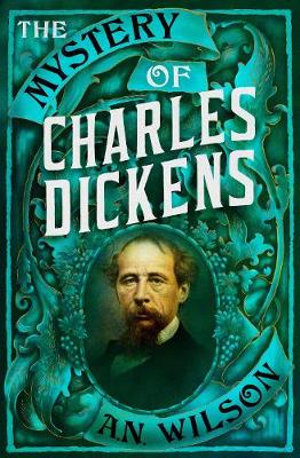
Biography of Care Experienced People The Mystery of Charles Dickens A.N.Wilson 2020 In this pychological analysis of the great Victorian writer, A.N.Wilson explores how Charles Dickens drew on his own experiences as a child to create his popular novels. Wilson uses the idea of the 'false self' to suggest that Dickens protected his inner child from public scrutiny yet told the story of his childhood through his books. External Website
- Eleanor
Biography of Care Experienced People Eleanor David Michaelis 2020 This is David Michaelis' portrait of Eleanor Roosevelt, an orphaned niece of President Theodore Roosevelt, and America’s longest-serving First Lady. Long seen as an avatar of democracy, activist, and humanitarian, Eleanor Roosevelt was one of the world’s most widely admired and influential women. In the first single-volume cradle-to-grave portrait in six decades, Michaelis shows how Roosevelt converted her Gilded Age childhood of denial and secrecy into a marriage with her fifth cousin Franklin. External Website
- 45 Care Leaver Friendly Ways
Academic Articles 45 Care Leaver Friendly Ways Care Leavers Association 2017 The CLA has produced a short guide on how to work with adolescent looked after children and care leavers. This booklet has been created by care leavers who were involved in our health project. It is in their own words wherever possible. They share what would have made a difference to them now and when they were in care as a child. It is also punctuated by statistics on outcomes for care leavers so that you understand how growing up in care can affect an individual for their entire life. External Website
- James VI and I: Life of the Week
Radio & Podcast James VI and I: Life of the Week History Extra Podcast 2024 In this History Extra podcast, historian Joe Ellis discusses the life of King James VI of Scotland (1566-1625) who also became King James I of England (from 1603 until 1625) Joe Ellis describes James VI as a “cradle king” because he was “effectively orphaned” after his father, Henry Stuart, Lord Darnley, was killed in 1567 and his mother, Mary Queen of Scots was imprisoned the same year. Although Mary escaped from Lochleven Castle in 1568, she never saw her son again. James VI/I is remembered for Guy Fawkes’ attempt to blow up parliament and assassinate him; for his obsession with witches; and for commissioning what’s known as the King James bible. External Website
- Jackie Kay on putting her adoption on stage – and getting a pay rise for her successor
Blogs/Web Pages/Articles Jackie Kay on putting her adoption on stage – and getting a pay rise for her successor Jackie Kay 2019 When Scotland’s national poet travelled to Nigeria to ask her birth father if he ever thought of her, he said no. Does it hurt to put this on stage? And should the next ‘makar’ be on £30,000? External Website
- Yusuf P. McCormack (poet)
Poets Yusuf P. McCormack (poet) Yusuf P. McCormack Yusuf Paul McCormack was an Artist, Poet, Writer/Author and Trainer, based in Rugby, Warwickshire. He took early retirement from the civil service in 2015 and wrote his first verse in November of that year. It was an epiphany moment and, consumed, Yusuf wrote solidly for the next 12 months about his childhood growing up in children's institutions. In December 2016 he began to translate his written work on to canvas, where he attempted to explore the emotions that he was unable to voice as a child. His work explores the world he experienced, felt and witnessed as a child who was illegitimate, mixed raced and rejected. Yusuf’s art was his intuitive way of working using memory and imagination as a way to develop his own style. He used his combined experiences as an artist, a child of the state, to inform those who genuinely want to improve and sustain better outcomes for those who never chose their start in life. Yusuf died in January 2021, one of the over 150,000 deaths in the UK from Covid-19 during the world pandemic. External Website
- Superheroes, Orphans and Origins: 125 Years in Comics
Non Fiction Superheroes, Orphans and Origins: 125 Years in Comics Foundling Museum 2022 Many of the most inspiring characters in comics and graphic novels began their epic journeys as orphaned or abandoned children. In these stories, the loss of a parent inflicts challenges that even superpowers cannot easily resolve. For over a century and millions of readers, the comic strip is a space in which this narrative has been continuously reimagined. Superheroes, Orphans & Origins: 125 Years in Comics offers a richly illustrated and thought-provoking exploration of the representation of orphans, foundlings, adoptees and foster children in sequential art. Surveying 125 years of creative practice and an international cast of characters, this book examines how care-experience is depicted in early comic strips like Little Orphan Annie, celebrated superhero narratives including Superman and Batman, and popular Japanese manga, among other examples. The complex issues and identities that feature in these stories are considered from a variety of perspectives, ranging from art historical to activist. Contributing authors include Lemn Sissay, MBE and award-winning artists Carlos Giménez and Lisa Wool- Rim Sjöblom, all drawing inspiration from their own experiences in care. Bringing together critical essays, candid conversations and outstanding artwork, this book encourages a new way to experience comics. This book is published on the occasion of the first major exhibition to focus on the representation of care experience in comics, produced by the Foundling Museum in London (April – August 2022). External Website
- We Have a Ghost
Films/Videos We Have a Ghost 2023 We have a Ghost (2023, Netflix) is an American comedy supernatural film with a kinship care story in the background. The film tells the story of a family of 4 who discover a ghost, Ernest (David Harbour), in the attic of their new home. Father Frank Presley (Anthony Mackie) wants to cash in on the phenomenon and starts posting video to YouTube. The family becomes famous. Youngest son Kevin Presley (Jahi Winston) befriends Ernest and discovers that the ghost has a daughter who was raised by Ernest’s in-laws. In the meantime, the CIA get involved … External Website
- Death in Holy Orders (Novel)
Fiction featuring Care Experience Death in Holy Orders (Novel) P.D.James 2001 Death in Holy Orders (2001) is a crime novel by noted British novelist PD James (1920-2014). The setting is a Church of England theological college, Saint Anselm’s, which trains Anglican priests. Saint Anselm’s is located on a cliff along the Suffolk coast. There are 3 Care Experienced characters in the story – Ronald Treves, an adoptee; Raphael Arbuthnot, who was abandoned at Saint Anselm’s as a baby; and Kate Miskin, who was raised by her grandmother. Ronald Treves and Raphael Arbuthnot are ordinands or trainee priests; Kate Miskin is a police office with the Metropolitan police. The police, let by Adam Dalgliesh (who features in 14 of James’ novels), is investigating the brutal murder of a visiting archdeacon. *Spoiler Alert* None of the Care Experienced characters are murderers. External Website
- Pierce Brosnan (actor)
Actors Pierce Brosnan (actor) Pierce Brosnahan (Brosnan) was born on 16 May 1953. His father abandoned the family when Brosnan was an infant. When he was four years old, his mother moved to London to work as a nurse. From that point on, he was largely brought up by his maternal grandparents, Philip and Kathleen Smith. After their deaths, he lived with an aunt and then an uncle, but was subsequently sent to live in a boarding house run by a woman named Eileen. The young Pierce Brosnan began his working life as a trainee commercial artist, until a colleague invited him to join his theatre club. From there he joined with others to form the Oval House Theater Company, working during the day in a range of jobs to support himself. After two years Pierce decided to study acting at the Drama Centre of London and worked on stage at the West End. He moved to Los Angeles in 1982 with his first wife, Australian Cassandra Harris. Soon after he was cast as Special Agent Ben Pearson in the American police procedural, Remington Steele, which aired first in 1982 and continued production until 1987. Brosnan began in the role of James Bond in 1994 and made 4 films in that role. External Website
- The Death of Dora Black
Fiction featuring Care Experience The Death of Dora Black Lainie Anderson 2024 Kate Cocks was born in Moonta, South Australia, was in kinship care as a child, and later worked for the South Australian State Children’s Department at the Edwardstown Industrial School. In 1915, she became South Australia’s first woman police office and was the first policewoman in the British Empire to receive the same salary as male police officers. What Anderson does in The Death of Dora Black is tell the story of Kate Cocks while she imagines Cocks on the beat solving a crime. The result is a charming “cosy murder mystery” in which 42-year-old Kate Cocks and her assertive junior, 27-year-old Constable Ethel Bromley, set out to explain the murder of Dora Black whose body has been found on the beach at Glenelg. External Website