Search Results
5829 results found with an empty search
- George Lopez
Actors George Lopez George Edward Lopez (born April 23, 1961) is an American comedian and actor. He is known for starring in his self-produced ABC sitcom. By the age of ten he was living with his maternal grandmother, having been deserted by both parents. Lopez's stand-up comedy examines race and ethnic relations, including Mexican American culture. Lopez has received several honors for his work and contributions to the Latino community, including the 2003 Imagen Vision Award, the 2003 Latino Spirit Award for Excellence in Television and the National Hispanic Media Coalition Impact Award. He was also named one of "The Top 25 Hispanics in America" by Time magazine in 2005. External Website
- Foster Focus Mag
Academic Articles Foster Focus Mag Foster Focus Mag 2021 Foster Focus is a monthly magazine dealing exclusively and entirely with the Foster Care Industry. The core of the magazine are seven monthly featured sections, Anonymous Faces, Ask a Pro, Editor’s Notes, Family Adventures, Guest Speaker, What Do They DO? A nonprofit profile, Alumni Perspectives and Lawmakers. These sections coupled with cover stories and coverage of events focused on foster care will, in fact make for the most in depth view of the Foster Care Industry ever published. Accomplished doctors, attorneys and psychiatrists and New York Times bestselling authors make up the writing staff for Foster Focus they add credibility and project a sense of understanding to our readers. A range of stories and subjects are covered, highlights include; interviews with Country star Jimmy Wayne and from the NFL's New Orleans Saints Jimmy Graham & Actress Nia Vardolas, exclusive stories by Dr. John DeGarmo, Rhonda Sciortino, FCAA CEO Adam Robe and Casey Family Programs CEO William Bell. External Website
- Gianna Simone
Actors Gianna Simone Gianna Simone (born December 22, 1989) is an American actress, model, and producer. Gianna Simone grew up in East Boston in what she describes as a “tough setting”; she was physically and emotionally abused. When she was 14, Gianna was put into foster care, going from home to home while a girls’ home was her base. She began her modeling career at the age of 16 and moved to Los Angeles when she was 21 to pursue a career in acting.Gianna Simone has appeared in roles in the feature films Star Trek Into Darkness (2013), Mother's Day (2016), I Can Only Imagine (2018), Unbroken: Path to Redemption (2018), and several television series. Gianna has set up the Gianna Simone Foundation with the aim of mentoring young people in foster care and to rescue animals. External Website
- Academic theses, M
Authors M The Orhan Among Us: An Examination of Orphans in Newbery Award Winning Literature ➝ Back to Top
- Exploring the legal representation of individuals in foster care: What say youth and alumni?
Academic Articles Exploring the legal representation of individuals in foster care: What say youth and alumni? J Jay Miller et al. 2017 Despite the overwhelming consensus that foster youth involved in dependency court proceedings are entitled to effective legal representation, few studies have examined this issue from the perspective of those most impacted: foster youth and alumni. This exploratory study examined the perceptions of foster youth/alumni (N=100) about the legal representation they received while in out of home care. All participants were either currently or previously in foster care in one southeastern state in the United States. Results indicate that participants perceived a lack of quality communication and interaction with their legal representatives. No difference in these perceptions was found by reported permanency outcome or demographic trait, though analysis did reveal a positive relationship between overall foster care experience and perception of legal representation. After a review of relevant literature, this paper reports findings, outlines salient discussion points, and discusses implications derived from this study, including identifying apposite areas for future research. External Website
- The Stolen Generations. The removal of Aboriginal children in New South Wales 1883 to 1969
Academic Books & Book Chapters The Stolen Generations. The removal of Aboriginal children in New South Wales 1883 to 1969 Peter Read 1981 In 1981, the Department of Aboriginal Affairs published a ground-breaking paper on the Stolen Generations. The paper, written by Peter Read, was among the first attempts to document the devastatioin of forcibly removing Aboriginal children in Australia from their parents. This reprint of that paper was published to help educate all Australians about this history and the intergenerational legacy of the Stolen Generations. Documents the disruption of families when children were forcibly removed from their homes and sent to state or church-run institutions, boarding homes, residential schools, and adoption programs. The author concludes that it is a story of attempted genocide. External Website
- Lost Boys and Recovered Classics: Literary and Social Memory in Lorenzo Carcaterra's Sleepers (1995)
Academic Articles Lost Boys and Recovered Classics: Literary and Social Memory in Lorenzo Carcaterra's Sleepers (1995) Christopher Wilson 2008 Sleepers tells the story of 4 boys incarcarated in a juvenile detention centre where they were beaten and sexually abused. In this article, Christopher Wilson explores the interplay of social memory with the use of Alexander Dumas' The Count of Monte Criso (1844-45) as a political marker and as the central text in Carcaterra's story. External Website
- James Dean
Actors James Dean James Byron Dean (February 8, 1931 – September 30, 1955) was an American actor. James' mother died when he was nine and his father sent him to live with relatives. James dropped out of university to pursue acting. In 1953 he performed the role of Cal Trask in East of Eden, for which he was posthumously nominated for Best Actor in the 1956 Academy Awards. He is remembered as a cultural icon of teenage disillusionment and social estrangement, as expressed in the title of his most celebrated film, Rebel Without a Cause (1955), in which he starred as troubled teenager Jim Stark. After his death in a car crash, Dean became the first actor to receive a posthumous Academy Award nomination for Best Actor, and remains the only actor to have had two posthumous acting nominations. In 1999, the American Film Institute ranked him the 18th best male movie star of Golden Age Hollywood in AFI's 100 Years...100 Stars list. External Website
- From Folktales to Fiction: Orphan Characters in Children’s Literature
Academic Articles From Folktales to Fiction: Orphan Characters in Children’s Literature Melanie A. Kimball 1999 Orphan heroes and heroines are familiar characters in children’s literature, particularly in the fiction of the nineteenth and early twentieth century. This type of protagonist has its roots in folktales. An analysis of fifty folktales from different cultures reveals that, while the details of or- phan stories vary, there are some universal elements. A comparison of these patterns to a literary orphan story, The Secret Garden, demonstrates how the patterns found in orphan folktales were adapted and applied in children’s fiction. External Website
- Orphans Real and Imaginary
Academic Books & Book Chapters Orphans Real and Imaginary Eileen Simpson 1987 Eileen Simpson (1918–2002) was an American writer and psychotherapist. Simpson’s mother died when she was 1 years old and she and her sister were placed in a Catholic orphanage. Neglected by the nuns, she almost died of tuberculosis and, after their father died when she was 7, she and her sister were sent by relatives to a “preventorium” in New Jersey. Her Orphans, Real and Imaginary. Weidenfeld & Nicolson, 1987. It is personal history; it is also social and literary reflection. The first part is about her growing up spending time in a convent-orphanage and a sanatorium due to tuberculosis. The second part of the book is a brief survey of the treatment of orphans; the history, present day -1980s, as well as orphans in autobiography and literary orphans. External Website
- Academic Books & Book Chapters, V
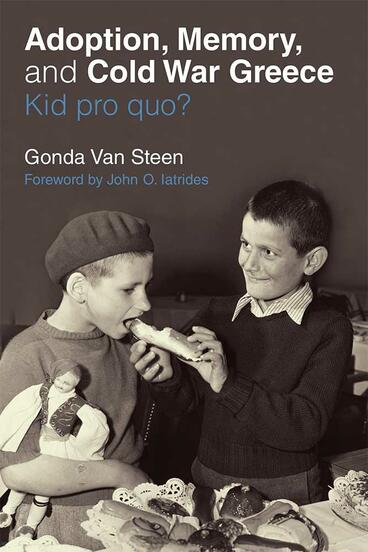
Authors V Adoption, Memory, and Cold War Greece: Kid pro quo? ➝ Back to Top
- Little Strangers: Portrayals of Adoption and Foster Care in America, 1850-1929
Academic Books & Book Chapters Little Strangers: Portrayals of Adoption and Foster Care in America, 1850-1929 Claudia Nelson 2003 When Massachusetts passed America’s first comprehensive adoption law in 1851, the usual motive for taking in an unrelated child was presumed to be the need for cheap labor. But by 1929―the first year that every state had an adoption law―the adoptee’s main function was seen as emotional. Little Strangers examines the representations of adoption and foster care produced over the intervening years. Claudia Nelson argues that adoption texts reflect changing attitudes toward many important social issues, including immigration and poverty, heredity and environment, individuality and citizenship, gender, and the family. She examines orphan fiction for children, magazine stories and articles, legal writings, social work conference proceedings, and discussions of heredity and child psychology. Nelson’s ambitious scope provides for an analysis of the extent to which specialist and mainstream adoption discourse overlapped, as well as the ways in which adoption and foster care had captivated the public imagination. External Website
- Otherways' into the Garden: Re-Visioning the Feminine in The Secret Garden
Academic Articles Otherways' into the Garden: Re-Visioning the Feminine in The Secret Garden Linda Parsons 2002 This article documents Linda Parsons interpretation of The Secret Garden. Re-visioning The Secret Garden as a Sleeping Beauty tale was the key that made it possible for Parsons to recognize the story as Mary's quest tale and as a feminine, subversive text with covert, symbolic messages. To arrive at this interpretation, Parsons explored a series of questions dealing with issues such as sight, speech, power, gender construction, and symbolism. This interpretation reveals the positive and potent ways women subvert the hegemony of patriarchal society and the celebration of the divine feminine within The Garden. External Website
- Marilyn Monroe (actor)
Actors Marilyn Monroe (actor) Marilyn Monroe (1926-1962), was an American actress, model, and singer who was famous for playing comedic "blonde bombshell" characters. She grew up in foster care, orphanages and kinship care. By the time she was 7, she'd been moved 7 times. Between the ages of 8 & 12, she had been moved 6 times. Monroe was born Norma Jeane Mortensen and went into care initially as a baby because Gladys, her mother, had postpartum depression (nothing is known of the father). At the age of 8 she returned to live with her mother for a while. Gladys’ friend, Grace McKee, took an interest in Norma Jeane’s welfare. When Gladys was admitted to a psychiatric hospital, Grace became her legal guardian. Both women worked in the movie industry but it was Grace who was particularly keen on the charismatic young Norma Jeane becoming a movie star, thinking she could be the next Jean Harlow. Norma Jeane did her best to fit in, to be a ‘good girl’ in her foster homes because she knew the alternative was an orphanage. But being a ‘good girl’ didn’t protect her. She was raped at the age of 8 by her foster father, sexually assaulted by Grace’s new husband when she was 11 and her 14 year old cousin attempted to rape her when she was 12. Grace eventually placed Norma in the Los Angeles Orphans Home. The orphanage was "a model institution" and was described in positive terms by her peers, but Monroe felt abandoned. Monroe was a top-billed actress for only a decade, but her films grossed $200 million (equivalent to $2 billion in 2019) by the time of her death. More than half a century later, she continues to be a major popular culture icon. On August 4, 1962, she died at age 36 from an overdose of barbiturates at her home in Los Angeles. Her death was ruled a probable suicide, although several conspiracy theories have been proposed in the decades following her death. External Website
- As a former foster kid, I'm giving Tracy Beaker a second chance
Academic Articles As a former foster kid, I'm giving Tracy Beaker a second chance Sophia Alexandra Hall 2021 Sophia Alexandra Hall went into foster care as a teenager and was cared for by her local authority until leaving at 18 to attend the University of Oxford. Here she writes about the new Tracy Beaker TV series, 'My Mum Tracy Beaker'. The original series is often cited as inadvertently paving the way for negative stereotypes and labels to be attached to children in care. Hall explains: "Tracy Beaker and I have a complicated relationship. When I told my friends growing up that I was in foster care, I’d often be compared to the fictional character. At first, I didn’t understand the comparison. Tracy was a pre-teen living in a children’s home, while I was living in a foster placement and revising for secondary school exams. But it was easier to shrug off my care experience as ‘like Tracy Beaker’ than to explain the complexities of the system to my peers." External Website
- Fremantle: Reflections of a child migrant
Academic Articles Fremantle: Reflections of a child migrant Michael McCarthy 2016 Michael McCarthy is a former child migrant. In this paper he reflects on his journey as six year old Michael May to Australia, of his time in St Vincent's Foundling Home in Western Australian and of being fostered to Tom and Irene Gollop. Many years later, he met with the woman who left him in a home because her husband was ill and when she returned to fetch him, was told he had been sent to Australia. External Website
- What "The Mandalorian" Teaches Us About Foster Care
Academic Articles What "The Mandalorian" Teaches Us About Foster Care Sophia Alexandra Hall 2021 Sophia Alexandra Hall went into foster care as a teenager and was cared for by her local authority until leaving at 18 to attend the University of Oxford. Here she writes about the 'The Madalorianan' an American space Western television series created by Jon Favreau beginning five years after the events of Return of the Jedi (1983). It stars Pedro Pascal as the title character, a lone bounty hunter who goes on the run after being hired to retrieve "The Child". Hall writes: "Finally, a story that portrays family as something that can be chosen, made up of those that care for you and not just the blood running through your veins. In the final scene of Season 2 of The Mandalorian, Mando reassures Grogu (AKA Baby Yoda) that it is okay to leave with his new guardian. As a former foster care kid, this was an all-too familiar scene. Having had multiple foster homes in the space of a few years, I had to deal with the introduction of new guardians on a regular basis. Forming personal bonds with my carers, ultimately only to have to leave, was a crushing reality I faced repeatedly throughout my childhood." External Website
- Care leavers in the ivory tower
Academic Articles Care leavers in the ivory tower Kirsty Capes 2019 Interrogating the care experience in creative-academic research. What is it like to be a care experienced person in higher education – particularly in doctoral study? As a writer and researcher, Kirsty Capes' work deals with the care experience through intersecting dimensions of reflective creative work and practice-based research. Being care experienced in higher education comes with its own unique set of problems and opportunities. Higher education continues to be a privilege afforded to those who are well-supported – with money, a supportive family and other strong support networks, and access to the educational resources they need. External Website
- Ingrid Bergman
Actors Ingrid Bergman Ingrid Bergman (29 August 1915 – 29 August 1982) was a Swedish actress who starred in a variety of European and American films, television movies, and plays. She was in kinship care as a teenager. Ingrid was only 3 years old when her mother died. Justus raised his daughter for the next 9 years with the help of his sister Ellen—whom Ingrid called Mama—and, being a photographer—he also owned and ran a camera shop—took many photos and home movies of his daughter. “During her childhood” writes David Smith, “Bergman may have been the most photographed person in Sweden.” Ingrid was 12 when her father died of stomach cancer. When her father died, Ingrid was left in the care of Aunt Ellen for a few months, until her aunt’s death 9 months later. The teenager then went to live with an uncle. She won many accolades, including three Academy Awards, two Primetime Emmy Awards, a Tony Award, four Golden Globe Awards, and a BAFTA Award. In 1999, the American Film Institute ranked Bergman as the fourth-greatest female screen legend of Classic Hollywood Cinema. External Website
- Imagined Orphans: Poor Families, Child Welfare, And Contested Citizenship in London
Academic Books & Book Chapters Imagined Orphans: Poor Families, Child Welfare, And Contested Citizenship in London Lydia Murdoch 2006 With his dirty, tattered clothes and hollowed-out face, Oliver Twist is the enduring symbol of the young indigent spilling out of orphanages and haunting the streets of late-nineteenth-century London. Although poor children were often portrayed as real-life Oliver Twists—either orphaned or abandoned by unworthy parents—they in fact frequently maintained contact and were eventually reunited with their families. In Imagined Orphans, Lydia Murdoch focuses on this discrepancy between the representation and the reality of children’s experiences within welfare institutions—a discrepancy that she argues stems from conflicts over middle- and working-class notions of citizenship that arose in the 1870s and persisted until the First World War. Reformers’ efforts to depict poor children as either orphaned or endangered by abusive or “no-good” parents fed upon the poor’s increasing exclusion from the Victorian social body. Reformers used the public’s growing distrust and pitiless attitude toward poor adults to increase charity and state aid to the children.With a critical eye to social issues of the period, Murdoch urges readers to reconsider the complex situations of families living in poverty. While reformers’ motivations seem well intentioned, she shows how their methods solidified the public’s antipoor sentiment and justified a minimalist welfare state that engendered a cycle of poverty. As they worked to fashion model citizens, reformers’ efforts to protect and care for children took on an increasingly imperial cast that would continue into the twentieth century. External Website