Search Results
Search this site
3414 results found with an empty search
- The Other Wife
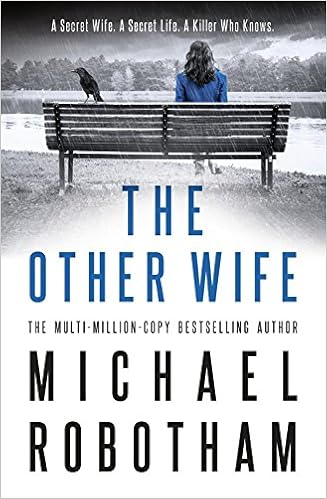
Fiction featuring Care Experience The Other Wife Michael Robotham 2018 2018 There are two Care Experienced characters in The Other Wife. There’s the woman who shows up when Joe O’Loughlin’s father is in hospital, claiming to be his wife. Turns out the respectable doctor, William O’Loughlin, has 2 families: the one Joe is a member of and a secret one with Olivia. Olivia has lived in England since she was 13 (she’s from Romania) and her tennis coach cum guardian raped her repeatedly. Apart from the ruckus around her marriage with the paedophile tennis coach, Olivia’s adult life has been a mostly quiet one. Olivia is in contrast to 23-year-old Micah Beauchamp, who was raised in kinship care, sexually abused by a neighbour for 7 years and then at age 13 set that neighbour’s house on fire (another vigilante!) for which, of course, he was punished by 3 months in detention. The paedophile lost fingers in the fire but there’s no indication he was state sanctioned for the abuse. Micah is out of control but then so is his best mate, Ewan, Olivia’s son from her marriage to the paedophile who was raised by Olivia and the good doctor. The above are suspects in the attempted murder of William O’Loughlin but it took some fine upstanding non-Care Experienced citizens to carry that out. External Website
- How Brendan Watkins claimed his birthright
Radio & Podcast How Brendan Watkins claimed his birthright Conversations (Brendan Watkins) 2023 In this episode of Conversations, Brendan Watkins talks about his discovery that his birth mother was a nun and his birth father was a priest. Brendan was 8 when he was told his was adopted (he grew up in Melbourne) – which made sense for him of why no one in his family looked alike. In his 20s, Brendan began seeking out his birth parents. He was surprised to find out that his birth mother was 27 when she ‘gave him up’. It took until 2018 before Brendan found out – via a DNA test – that he was “the son of a celebrated missionary priest.” External Website
- Clara Morrison
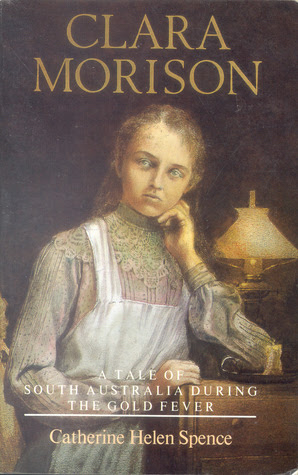
Fiction featuring Care Experience Clara Morrison Catherine Helen Spence 1854 Clara Morison (1854) is the first novel published by Scottish migrant to South Australia, Catherine Helen Spence (1825-1910). As the story opens, 19 year old Clara Morison, who has been living in the kinship care of her uncle for 3 years, is being sent out to South Australia by that uncle. Although Clara was born into the upper-middle classes, in South Australia she has little money. Therefore, one job she takes on (as governess work is rare) is as a servant, work she discovers takes up not only her time, but also her energy. A significant theme in the novel is the 1851 gold rushes in Victoria and NSW. The population of South Australia was significantly reduced as people, mostly men, rushed interstate to try their luck. External Website
- Conceptualizing Stigma
Academic Articles Conceptualizing Stigma Bruce G Link et al. 2001 This article explores various manifestations of stigma in the young and adult life of a care leaver and the multiple trauma encountered along the path of Fouzi Mathey Kikadidi, the author. Part essay, part testimonial, this article reflects on how perceptions and stereotypes can affect a young child and explores the defense mechanisms and tools used to overcome it. It highlights different approaches to deal with stigma and invites to a joint reflection on how children in care could repossess their own history. External Website
- Joan Didion's Blue Nights
Blogs/Web Pages/Articles Joan Didion's Blue Nights [Birth Mother] First Mother Forum 2017 [Birth Mother] First Mother Forum is a blog site run by Jane Edwards & Lorraine Dusky. On 3 November 2017, Lorraine Dusky revisited Joan Didion’s Blue Nights (2011), Didion’s memoir about the death of Didion’s adopted daughter, Qunintana. This was a blog she originally posted in 2011. The occasion for the revisiting was the release of a documentary about Joan Didion, The Centre Will Not Hold. In her blog post, Lorraine Dusky speaks of, years ago, writing to Joan Didion & her husband, wondering if their adopted daughter, Quintana Roo, could be her daughter. She did – eventually – receive a response & was told no. And eventually Dusky did find her daughter. In her reflection on Blue Nights, Lorraine Dusky wonders if Didion had ever “read a single book about adoptee psychology” as she seems not to understand that Quintana has been providing “clues about how being adopted is affecting” her. That said, Dusky sees it as a positive that “Didion does not pretend that adoption was not much more complicated than she ever imagined it would be…” External Website
- Annie Besant
Writers Annie Besant 1847-1933 Annie Besant (1847 – 1933) was a British socialist, theosophist, women's rights activist, writer, orator, educationist, and philanthropist. Annie Wood was born to Irish parents, William Wood and Ellen Morris, who left Dublin, Ireland for England in 1845 because of the famine. William Wood died of tuberculosis when Annie was 5 years old. Instead of taking charity, Ellen took over the running of a boy’s boarding house at the Harrow School. Because Ellen considered it unsuitable for Annie to live at the boarding house, the child was put into foster care in Dorset with Ellen Marryat until she was 16. Annie Besant became a prominent member of the 1880s revival of socialism, along with George Bernard Shaw, and it was Shaw who encouraged Besant to join the Fabian Society. She was active in a number of social reforms, including the London matchgirls strike of 1888—which she called “white slavery”—when she successfully challenged the match manufacturers to improve working conditions. Besant was involved with Theosophy from the late 1880s and moved to Madras, India in 1893. There she became involved in the independence movement and in education, founding the Central Hindu College which later became the Central Hindu School. Besant also encouraged Madan Mohan Malaviya in establishing the Banaras Hindu University. External Website
- Children's Non-fiction, W
Authors W Oprah: The Little Speaker ➝ Back to Top
- Trumpet
Fiction by Care Experienced authors Trumpet Jackie Kay 1998 Jackie Kay's debut novel, Trumpet, tells the story of fictional jazz artist, Joss Moody, a transgender man. It is not until his death that Joss' adopted son, Colman, finds out that Joss is a biological female. Disturbed by this, he seeks revenge by making a deal to write a 'tell all' book. External Website
- About | Care Experience and Culture
A Digital Archive, the first of its kind featuring care experienced literature, spoken word and academic material. Dr. Rosie Canning (UK) & Dr Dee Michell (Australia) are Care Experienced scholars with a lifelong passion for reading. Having experienced many benefits from reading as a pastime and aware of the varied representations of CEP over time, Rosie and Dee developed this Digital Archive, a one-stop accessible site with information about Care Experienced characters in fiction and on-screen, as well as Care Experienced writers, artists, actors and many more. Trauma warning: This archive contains material relating to care experience, including references to abuse, neglect, sexual violence, and institutional harm. Hear Dee speak about the digital archive: The Digital Archive will build from work Rosie and Dee have already undertaken. They both have collections (Rosie’s mostly British and Dee’s mostly Australian) of stories written about Care Experienced characters and Care Experienced People - writers, artists, actors etc - many of these will form the ‘backend’ of the Digital Archive, to be called Care Experience & Culture DEFINITION OF CARE EXPERIENCE: Our definition of Care Experience includes statutory provisions as well as informal arrangements made through friends/family for children living in foster, residential, kinship care and children who have been adopted. We have also included experiences of some children who were displaced from their first family, enslaved, abandoned by family, or had their childhoods interrupted. We have included these experiences to recognise the emotional & psychological impact of children being displaced from family - however this happens - and do not include these in the traditional experience of ‘care’. See glossary HERE Dee was a Senior Lecturer in the Department of Sociology, Criminology & Gender Studies at the University of Adelaide and recently retired. She was in foster care for 15 years from the age of 3 and is the co-author (with Nell Musgrove) of The Slow Evolution of Foster Care in Australia - Just Like a Family (Palgrave Macmillan, 2018). Rosie completed her PhD in the Department of English at the University of Southampton. The focus of her research is the representations of orphans and care leavers in literature. Hiraeth her PhD novel, follows 16 year old Marianne as she leaves care in the mid-1970s. Dr. Rosie was in foster and residential care for 17 years from the age of 6 weeks. Webmaster Consultant Jamie Crabb is based in London. Following his degree in drama and education, he worked in education, disability, mental health and wellbeing roles before training as a psychotherapist/counsellor. He co-edited Study Skills for Students with Dyslexia (Support for Specific Learning Differences). He is a member of Reclaim Care , a collective focused on healing together, supporting each other, understanding shared histories and imagining possible futures.
- 404 | Care Exp Culture
There’s Nothing Here... We can’t find the page you’re looking for. Check the URL, or head back home. Go Home
- 404 | Care Exp Culture
There’s Nothing Here... We can’t find the page you’re looking for. Check the URL, or head back home. Go Home
- 404 | Care Exp Culture
There’s Nothing Here... We can’t find the page you’re looking for. Check the URL, or head back home. Go Home
- 404 | Care Exp Culture
There’s Nothing Here... We can’t find the page you’re looking for. Check the URL, or head back home. Go Home
- 404 | Care Exp Culture
There’s Nothing Here... We can’t find the page you’re looking for. Check the URL, or head back home. Go Home